
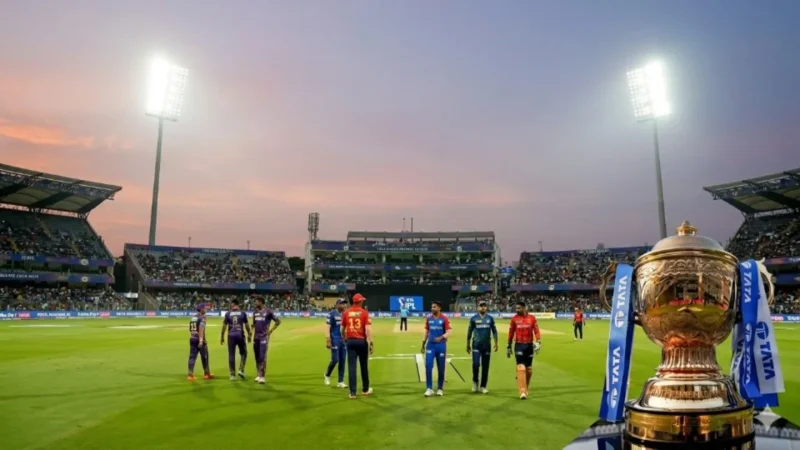
BCCI has made it official — the controversial Impact Player rule is here to stay. At a pre-season captains’ meeting held on March 26, 2026, the Board of Control for Cricket in India confirmed that the Impact Player rule will continue in IPL 2026 and will not be reviewed until at least IPL 2027. This decision has divided the cricket world, with some fans loving the extra excitement it brings and many top cricketers expressing serious concern about its long-term effect on Indian cricket.
So what exactly is the Impact Player rule, why is it so controversial, and what does it mean for the teams you support? Let’s break it all down in simple language.
What is the Impact Player Rule in IPL?
The Impact Player rule was introduced in IPL 2023. Here is how it works in simple terms:
- Each team submits a playing XI plus 4 substitute players before the match
- During the match, a team can swap one player from their XI with one of the 4 substitutes
- This substitution can be made at any point — after an over, between innings, or at any strategic moment
- The substituted player cannot return to the game
- The Impact Player can bat AND bowl — unlike a normal substitute who can only field
In practice, what this means is that teams can effectively play with 12 players. A team that has already used 7 batters can bring in an extra specialist bowler. A team that needs runs can bring in an additional big-hitter. It completely changes the strategy of team selection.
Why Did BCCI Confirm the Rule Stays?
At the IPL 2026 pre-season captains’ meeting, match officials Javagal Srinath and Nitin Menon led the proceedings. The BCCI made it clear that the Impact Player rule will remain in place for IPL 2026 and 2027 without any immediate review. Franchises and captains were officially informed that any reassessment will only happen after the 2027 season at the earliest.
The BCCI’s reasoning is straightforward: the Impact Player rule makes matches more exciting, increases scoring, and gives fans more drama in every game. From a business and entertainment perspective, it has been a massive success.
Who Hates the Impact Player Rule — And Why?
Not everyone is happy with this decision. Several of India’s most respected cricketers have spoken out against the Impact Player rule. The biggest critic right now is Delhi Capitals all-rounder Axar Patel, who recently said that teams now prefer specialist batters or specialist bowlers instead of investing in genuine all-rounders — players who can both bat and bowl at a high level.
Think about it from Axar’s perspective. He is a brilliant all-rounder — a left-arm spinner who can also bat well in the lower order. But with the Impact Player rule, a team can simply bring in a better batter when they need runs, or a better bowler when they need wickets. The value of a true all-rounder goes down significantly because teams no longer need that balance in their core XI of 11 players.
Impact Player Rule — Arguments For and Against
Arguments in Favour
- Matches are more exciting and scores are higher
- Gives coaches more tactical flexibility during the game
- Gives more players a chance to appear in matches
- Fans get to see more big-hitting and more wickets
- Helps younger players ease into high-pressure situations
Arguments Against
- Reduces the value and importance of all-rounders
- Makes it harder for genuine all-rounders to develop in India
- Scores are artificially inflated — making it harder to compare across eras
- Critics say it is actually hurting India’s development of future world-class all-rounders
- Some feel it makes cricket less of a team sport and more of a video game
How Does the Impact Player Rule Affect the Teams You Support?
Every IPL franchise will use the Impact Player rule strategically in IPL 2026. Here are some examples of how different teams might use it:
- RCB: Bring in Jacob Bethell (extra batting power) if Phil Salt fails early
- CSK: Use an extra specialist spinner in the middle overs when batting first
- KKR: Swap a lower-order batter for an extra pacer when defending a total
- SRH: Use the rule to bring in a fresh strike bowler in the death overs
Also Confirmed at the Captains’ Meeting — Catch Rule Strictly Enforced
Along with the Impact Player announcement, BCCI also confirmed that the catch rule will be strictly enforced in IPL 2026. Fielders must have full control of the ball AND their body movement before celebrating a catch. Any loss of balance — even after initial contact — could render the catch invalid. This comes after several controversial catch dismissals in recent seasons that caused huge debates among fans and experts.
The BCCI also confirmed updated ball replacement procedures and stricter bat checks will be in place throughout IPL 2026. Teams bowling second will be allowed one mandatory ball change request after the 10th over of the second innings.
Frequently Asked Questions (FAQs)
What is the Impact Player rule in IPL 2026?
The Impact Player rule allows each team to substitute one player from their playing XI with one of four pre-selected substitutes at any point during the match. The Impact Player can bat and bowl, unlike a normal substitute.
Will the Impact Player rule continue in IPL 2027?
Yes. The BCCI has confirmed the Impact Player rule will continue in both IPL 2026 and IPL 2027 without any review during this period.
Why do players dislike the Impact Player rule?
Many all-rounders feel the Impact Player rule reduces their value. Since teams can swap a batter for a bowler mid-match, they no longer need genuine all-rounders who can do both. Axar Patel is among the most vocal critics.
When was the Impact Player rule introduced in IPL?
The Impact Player rule was introduced in IPL 2023. It has been used in every season since then and is now confirmed through IPL 2027.
What other new rules are there in IPL 2026?
In IPL 2026, the catch rule will be strictly enforced (fielders must maintain full control). Teams bowling second can request one mandatory ball change after the 10th over. Bat checks will also be stricter this season.